The retina represents the noblest and most delicate tissue of the entire visual system, acting as a complex photographic film that captures light and transmits it to the brain as electrical impulses. When alterations manifest in this structure, the speed and precision of clinical diagnosis become the determining factors in preserving visual capacity.
Aziz Ophthalmology stands as a reference point of excellence as a retina specialist in Dubai and Abu Dhabi, offering a level of care that integrates international academic training with the most advanced diagnostic technologies. Dr. Hassan Abdul Aziz, thanks to an exceptional educational path at the world’s most prestigious institutions, manages every clinical challenge related to the posterior segment of the eye with meticulous care. The clinic’s mission is to provide clear answers and targeted therapeutic solutions, placing patient safety and the protection of their visual capital at the center through a rigorous, ethical, and non-sensationalist care path.
What Are Flashes and Floaters, and When Should You Be Concerned?
Many patients describe, with a touch of apprehension, the sudden appearance of moving bodies within their visual field, often called “floaters.” In the vast majority of cases, these small dark shadows, filaments, or dots that seem to float are caused by the natural aging process of the vitreous body, the gelatinous substance that fills the ocular cavity. However, when these floaters appear in large numbers and suddenly, accompanied by luminous flashes (the so-called “lightning”), the situation requires immediate attention. These glares are, in reality, the physical manifestation of mechanical traction exerted by the vitreous on the retina. Ignoring these signals can expose the patient to concrete risks, making a timely consultation with a retina specialist in Dubai and Abu Dhabi necessary to rule out tears or detachments.
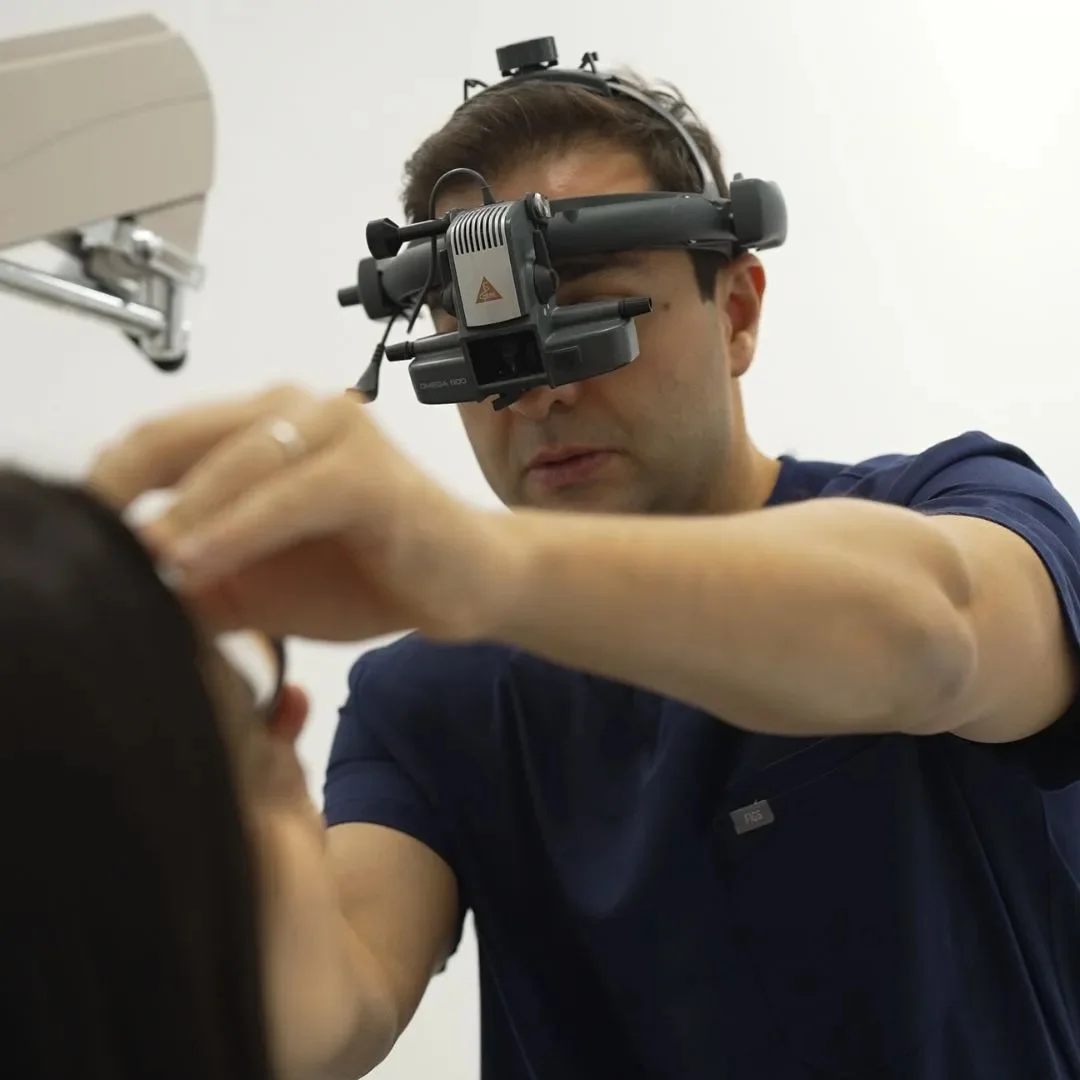
The retina, being devoid of pain receptors, is unable to signal distress with pain; instead, it sends light or mechanical signals. The appearance of a dark peripheral shadow, often described as a “curtain” progressively closing, is an extreme alarm symptom indicating an ongoing retinal detachment. It is impossible to manage such a condition through rest or home remedies. Accurate monitoring via fundus examination, performed with a dilated pupil, allows the specialist to map every millimeter of the retinal periphery. Only through in-depth analysis conducted by expert hands is it possible to distinguish between a simple benign vitreous phenomenon and a real threat to the integrity of the retinal tissue, guaranteeing the patient the peace of mind of a precise diagnosis.
Why Is Timeliness the Pillar of Retinal Surgery?
In the field of retinal surgery, time is not just a variable, but the element that defines the final success of every intervention. A retinal tear identified early can often be treated with a quick, painless, and highly effective outpatient laser intervention, capable of “sealing” the lesion and preventing a potential detachment. Conversely, when retinal tissue separates from the ocular wall, surgical intervention becomes indispensable and more complex. Modern vitreo-retinal surgery, performed by Dr. Aziz, uses micro-incision techniques that allow for repositioning the retina and restoring the eye’s natural anatomy, minimizing surgical trauma and accelerating recovery times.
The technical competence required for these maneuvers is extremely high and requires constant dedication to precision. The use of 3D digital visualization systems and latest-generation microsurgical tools allows for operating with micrometric precision, safeguarding the most delicate nervous structures. It is fundamental for the patient to understand that a timely intervention serves not only to restore vision but to prevent damage to the photoreceptors from becoming irreversible. Every hour that passes in the presence of a retinal detachment entails a progressive loss of light-sensitive cells; for this reason, the availability of direct communication channels with the clinic allows patients to receive immediate guidance on the steps to take.
Diagnostic Technology at the Service of the Posterior Segment
The correct management of retinal pathologies, such as diabetic retinopathy or age-related macular degeneration (AMD), is based on state-of-the-art diagnostics. Instruments such as Optical Coherence Tomography (OCT) have become indispensable for the work of a modern retina specialist in Dubai and Abu Dhabi. This device allows for obtaining high-resolution scans of retinal layers, making edema, fluid collections, or epiretinal membranes visible that would escape a standard clinical exam. Thanks to this data, Dr. Aziz can personalize the plan for intravitreal injections, a fundamental treatment to stabilize sight in the presence of exudative maculopathies, ensuring that every injection is calibrated based on the patient’s actual clinical need.
Investment in such instruments is not an accessory element, but the beating heart of surgical activity. The ability to correlate radiological images with the observed clinical picture allows for defining whether it is necessary to proceed with a vitrectomy or whether, conversely, the condition can be controlled through close follow-up. Diagnostic meticulousness is what transforms the therapeutic path into a safe care experience. The patient is involved in understanding their clinical picture: seeing their own OCT images helps to grasp the gravity of the situation and the importance of adherence to prescribed therapies, building a bridge of trust between the doctor’s eye and the patient’s awareness.
What to Expect After Retinal Surgery?
The post-operative period of retinal surgery may require specific discipline, sometimes including the need to maintain a particular posture to promote retinal repositioning. It is a phase that requires collaboration and patience, but which is facilitated by the constant support of Aziz Ophthalmology. Follow-up is not limited to checking the surgical wound but constantly monitors the nervous tissue’s response to treatment. The patient must be aware that retinal healing follows precise biological timings; vision may improve progressively in the weeks following the intervention, as edema is reabsorbed and nervous functions stabilize.
The constant presence of the specialist during this phase is the true strength of patient management. Availability in clarifying doubts regarding subjective symptoms such as temporary perception of halos or small variations in focus helps to reduce post-operative stress. It is important that the patient meticulously follows therapy with eye drops and respects the recommended physical limitations, as the final success of retina surgery also depends on the attention paid during the healing period. Aziz Ophthalmology ensures that every patient can count on safe guidance and scheduled check-ups, necessary to confirm the stability of the result over time.
A Daily Commitment to Retinal Health
In conclusion, retinal health is a field of ophthalmology that does not admit approximations. Choosing a professional operating in Dubai and Abu Dhabi requires evaluating not only the academic curriculum but also the ability to offer comprehensive diagnostic and surgical support, always oriented toward maximum scientific rigor. Aziz Ophthalmology is confirmed as a center where surgical experience is combined with deep professional ethics, ensuring that every retinal procedure is performed in compliance with the highest international standards. Protecting sight means acting with awareness, responding promptly to the signals the eyes send. Anyone wishing to receive a specialist evaluation for doubts regarding their retinal health can find in Dr. Hassan Abdul Aziz an expert dedicated to providing answers based on clinical evidence and guiding toward the best care path to preserve sharp and safe vision in the long term.