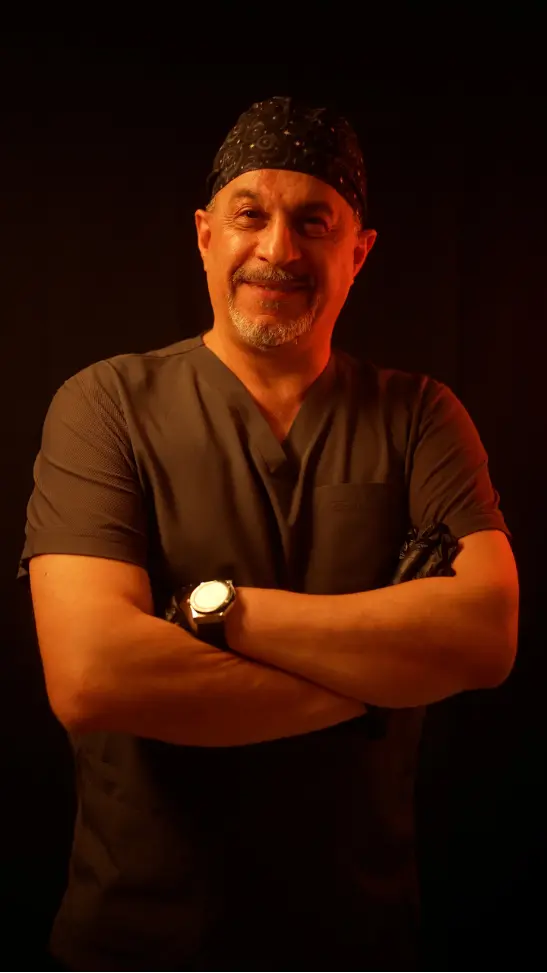
In a city where aesthetic medicine is often associated with speed, trends and bold promises, some surgeons choose a different path. They take time to explain, they say no when necessary and they consider every procedure as part of a person’s long-term wellbeing. Dr Babak Hatami belongs to this group. With more than three decades of experience in plastic, aesthetic and reconstructive surgery, he has built his reputation on clarity, ethics and results that look natural rather than artificial.
His clinic, located on Al Wasl Road in Umm Suqeim, Dubai, receives patients from many different backgrounds, each with their own story and expectations. To understand the way Dr Babak Hatami works, however, it is necessary to start from the beginning: from a young medical student with a clear vocation, through years of practice in Europe, to a surgical career in Dubai that has now spanned more than a decade. This article retraces that journey, explains the values that guide his work and describes what patients can expect when they cross the threshold of his practice.
Who Is Dr Babak Hatami and How Did His Vocation Begin?
Many doctors discover their area of interest during their training. For Dr Babak Hatami, the direction was clear from the very start. He has often explained that he enrolled in medical school with one precise goal in mind: becoming a plastic surgeon. It was not a choice made by chance, but a vocation that shaped every step of his education.
Plastic surgery is a discipline that combines two worlds. On one side there is medicine, with its rigorous knowledge of anatomy, physiology and healing. On the other side there is a sense of form, proportion and harmony, closer to art than to pure science. Dr Babak Hatami was drawn precisely to this combination. He sees the human body as something to be respected and understood, not simply reshaped according to the fashion of the moment.
In 1992 he began his formal path in plastic surgery, and in 1999 he started practising independently. Since then, his entire career has unfolded in the private sector, a choice that allowed him to dedicate time and attention to each patient and to build relationships based on trust.
Over the years, his expertise has grown across several areas of the discipline:
- aesthetic and cosmetic surgery of the face, breast and body
- plastic and reconstructive surgery
- microsurgery
- hand surgery
- treatment of burns and their consequences
This broad background is not a detail. Working on reconstructive cases, hand injuries and burns requires extreme precision and a deep understanding of how tissues heal. Surgeons who have faced these challenges tend to approach aesthetic procedures with greater respect for function, knowing that beauty and health must go together.
Today, after more than thirty years in the profession, Dr Babak Hatami describes his work as a delicate balance between art and science. His goal, as he often explains to patients, is to enhance the natural contours of the body while respecting its structure, so that people can feel truly confident in themselves. Understanding where this vision comes from helps explain why his approach is so focused on listening, explaining and choosing carefully.
How Did His Career Develop Between Romania, the United Kingdom and Dubai?
The professional path of Dr Babak Hatami is international, and this is one of the elements that most strongly shapes his way of working. His early years of practice took place in Romania, where he trained and worked for a long period, gaining experience in a wide range of surgical cases.
During those years, he became a member of several professional bodies, including the Romanian Society of Plastic and Reconstructive Surgery, the Romanian Society of Hand Surgery and the European Society of Aesthetic Surgery. Belonging to these societies meant being part of a community of surgeons committed to updating their knowledge, sharing experiences and maintaining high standards of practice.
He was trained under the supervision of experienced surgeons, an experience that he still considers fundamental. In surgery, many lessons cannot be learned from books alone. They come from watching, assisting and gradually taking responsibility, case after case, under the guidance of those who have walked the same path before.
Another important step was his registration in the United Kingdom, on the register of the General Medical Council, which brought him into contact with one of the most structured medical systems in Europe. This experience reinforced his attention to protocols, patient safety and clear communication, values that remain central to his practice today.
In 2014, Dr Babak Hatami moved to Dubai, where he has been practising ever since. The city represented a new environment: dynamic, international and home to patients from every corner of the world. Working with such a varied population requires sensitivity to different skin types, anatomies, cultures and expectations.
His international background brings several advantages:
- familiarity with different surgical schools and techniques
- experience with patients of many ethnicities and body types
- a strong focus on safety protocols and continuous updating
- the ability to communicate with patients in an open, respectful way
More than a decade after his arrival, Dr Babak Hatami has become a familiar name in the city for patients seeking plastic surgery with a calm, ethical approach. His career shows that experience is not only a matter of years, but of the variety of situations a surgeon has faced and learned from along the way.
What Areas of Plastic Surgery Does Dr Babak Hatami Work In?
The practice of Dr Babak Hatami covers the three main areas of aesthetic surgery: the face, the breast and the body. Alongside these, his background in reconstructive surgery allows him to treat more complex cases, such as scars, hand conditions and the consequences of burns.
In the field of body surgery, a central role is played by body contouring. This includes liposuction, abdominoplasty, extended abdominoplasty, arm and thigh lifts and, in selected cases, total body lifts. In his view, body contouring has changed profoundly over the years. Once it was mostly about removing fat. Today it is about repositioning and sculpting, removing fat where it is excessive and reusing it where volume is missing.
This idea of “liposculpture” is one of the aspects patients notice most. Dr Babak Hatami uses several technologies during liposuction to remove fat evenly, help the skin tighten and refine the contours of the treated areas. The aim is a body that looks harmonious and natural, almost like a sculpture, rather than simply thinner.
In breast surgery, his work includes breast augmentation, breast lift, breast reduction and male breast reduction for gynecomastia. Here the focus is on proportion, preserving sensitivity as much as possible and reducing discomfort during recovery. Results are designed to look natural, never exaggerated.
In facial surgery, the range of procedures includes rhinoplasty, eyelid surgery, facelift, brow lift, neck lift, chin surgery, otoplasty and facial implants. Rhinoplasty is one of the procedures he performs most often, with particular attention to how the new nose fits the rest of the face.
Alongside surgery, the clinic also provides non-surgical treatments such as dermal fillers, botulinum toxin, mesotherapy, PRP and chemical peels. These treatments are always proposed within a medical evaluation, never as quick fixes.
A list of procedures, however, does not tell the whole story. What connects them is a common principle: every intervention must respect the patient’s anatomy, health and identity. For Dr Babak Hatami, the goal is never to follow a trend, but to find the solution that suits each individual person.
What Is the Philosophy Behind His Approach to Patients?
If one word could summarise the philosophy of Dr Babak Hatami, it would probably be ethics. In a sector where demand is high and pressure from social media is strong, he believes that a surgeon’s first responsibility is to protect the patient, even when that means advising against a procedure.
This principle appears in many aspects of his work. Patient selection is one of the most important. Not every person who asks for surgery is a suitable candidate. Some may have health conditions that increase risks, others may have unrealistic expectations, and some may simply benefit more from a different solution. In these cases, Dr Babak Hatami prefers to explain the reasons openly and suggest alternatives, or to recommend waiting.
His communication style is often described by patients as didactic and empathetic. He takes time to explain what a procedure involves, what results are realistic, what risks exist and what recovery will look like. Patients who want technical details receive them; those who prefer a simpler explanation receive that too. The goal is always the same: an informed decision, made without pressure.
Several principles guide his approach:
- every treatment plan is built on the individual, never on a standard model
- natural results are preferred to exaggerated changes
- safety and long-term health come before any aesthetic goal
- patients are encouraged to ask questions at every stage
- the surgeon remains directly involved from the first visit to the final follow-up
Another characteristic is honesty about limits. Not every shape can be achieved, and not every body can respond in the same way. In rhinoplasty, for example, the thickness and quality of the skin influence what is possible. In body contouring, skin elasticity plays a decisive role. Explaining these limits from the beginning helps avoid disappointment and builds mutual trust.
This philosophy also explains why Dr Babak Hatami discourages shortcuts. Treatments performed without proper evaluation, products bought online, unverified procedures and surgery planned in a hurry may seem convenient, but they expose patients to risks that are often difficult to correct. In his view, a responsible surgeon must help patients understand these risks, rather than simply agreeing to every request.
How Does the Patient Journey Work at His Clinic?
For many people, the decision to undergo plastic surgery comes after months or even years of reflection. For this reason, the patient journey at the clinic of Dr Babak Hatami is designed to be clear, structured and reassuring, from the very first contact.
The journey can be summarised in four stages: listening, evaluating, treating and following up.
Listening is the starting point. During the first consultation, the surgeon dedicates time to understanding what the patient wants to change, why, and what they hope to feel afterwards. Medical history, lifestyle, previous treatments and expectations are all discussed.
Evaluating follows. The surgeon examines the area of concern, analyses proportions and considers the overall health of the patient. Where useful, simulations help visualise possible outcomes. For rhinoplasty, for example, computer simulations on photographs allow different versions of the nose to be compared, so that the patient can see which shape suits their face best. For breast augmentation, patients can try special garments with different sizes in front of a mirror, a simple but effective way to choose a volume that feels right.
Treating is the surgical or non-surgical phase itself, carried out with precision and attention to comfort and safety. The clinic places great importance on efficient organisation: appointments are scheduled quickly, and surgical planning avoids unnecessary waiting.
Following up completes the journey. After surgery, patients receive clear instructions and regular check-ups, with the surgeon personally involved in monitoring healing.
Some features of the clinic are particularly appreciated by patients:
- quick appointments and efficient scheduling
- management of urgent issues on the same day when needed
- direct communication with the surgeon throughout the process
- the possibility, for those who feel anxious, of speaking with former patients about their experience
This last point deserves attention. Fear is a natural part of the decision to have surgery. Hearing directly from someone who has already gone through the same procedure can help many patients feel more serene. It is one of the ways in which Dr Babak Hatami tries to make the journey more human, transparent and reassuring.
Why Does Dr Babak Hatami Believe in a Multidisciplinary Approach?
One of the aspects that most distinguishes the work of Dr Babak Hatami is his belief that plastic surgery should never be isolated from the rest of a patient’s health. For this reason, he works within a multidisciplinary approach, collaborating with other doctors, nutritionists and dietitians.
This approach is particularly important in body contouring. Many patients who come to the clinic would like to improve the shape of their abdomen, hips or thighs. In some cases, however, the most appropriate first step is not surgery but weight loss, supported by medical and nutritional guidance. Operating on a body that is still far from a stable weight can lead to less satisfying results and higher risks.
For this reason, Dr Babak Hatami often encourages patients to follow a path in stages:
- first, improving general health and reaching a stable weight with the help of the right professionals
- then, planning surgery to refine contours and address what diet and exercise cannot change
- finally, supporting recovery and the maintenance of results with nutritional advice
After surgery, nutrition continues to play a role. A balanced diet supports healing, helps reduce swelling and contributes to long-lasting results. Collaboration with nutritionists and dietitians allows patients to receive personalised advice rather than generic recommendations found online.
The multidisciplinary approach also influences how procedures are combined. In some cases, several interventions can be performed in the same session, a strategy sometimes described as tandem surgery. For example, fat removed during liposuction from one area can be reused to add volume to another, so that nothing is wasted. Combining procedures, however, always requires careful evaluation of the patient’s health, the duration of surgery and the recovery that will follow.
For Dr Babak Hatami, this way of working reflects a simple idea: an aesthetic result is only truly successful if it is achieved safely and if it fits into a healthy life. Surgery is one piece of a larger puzzle, and every piece must be in the right place.
What Characterises His Work in Body, Breast and Face Procedures?
Although his practice is broad, three procedures represent the heart of the work of Dr Babak Hatami: abdominoplasty and body contouring, breast augmentation and rhinoplasty. Each of them reflects his philosophy in a specific way.
In abdominoplasty and body contouring, attention to scars is a priority. Incisions are planned to remain as discreet as possible, and modern techniques, including skin glue, help scars blend into the natural lines of the body. Extended abdominoplasty and body lifts are planned to reshape the silhouette in a harmonious way, while liposculpture refines the contours of the abdomen and can even enhance muscle definition in selected patients. The aim is a body that looks balanced from every angle.
In breast augmentation, the main goal is a result that looks natural and feels comfortable. Pre-operative simulation with garments of different sizes helps patients choose a volume in harmony with their body. During surgery, particular care is taken to preserve sensitivity and to keep post-operative discomfort as low as possible. The same principles apply to breast lift and breast reduction, where shape, proportion and scar quality guide every decision. For men with gynecomastia, techniques are chosen to minimise visible scarring.
In rhinoplasty, the guiding principle is that the nose must suit the face. A beautiful nose on one person may look out of place on another. Using computer simulations on photographs, Dr Babak Hatami prepares different versions of the possible result, allowing patients to compare them and choose together with the surgeon. He is also clear about limits: depending on skin quality and nasal structure, not every shape can be achieved, and honest communication about this point is essential.
Across all these procedures, some common elements stand out:
- careful planning before every intervention
- respect for natural proportions and individual anatomy
- attention to scars and to the quality of healing
- realistic expectations, discussed openly
- close follow-up during recovery
This consistency is what patients often mention when describing their experience. They speak of a surgeon who explains, listens and takes responsibility, from the first conversation to the final result.
Why Should Patients Choose Medical Guidance Over Shortcuts?
In recent years, the world of aesthetics has been transformed by social media, online marketplaces and an abundance of information of very different quality. For patients, this creates confusion. Dr Babak Hatami regularly meets people who have tried shortcuts before coming to the clinic, and his advice on this subject is very clear.
Some of the most common risks he warns against include:
- injectable products bought online and used at home or by unqualified operators
- treatments carried out in settings without proper medical supervision
- surgery planned in a hurry, without a complete evaluation or adequate follow-up
- unrealistic expectations created by filtered images on social media
- recovery managed with improvised remedies instead of medical instructions
These choices may seem convenient at first, but they can lead to infections, irregular results, visible scars or complications that require further surgery to correct. In some cases, the damage is difficult to repair completely. His experience in reconstructive surgery has shown him how important it is to prevent problems rather than fix them later.
Choosing medical guidance means relying on a professional who knows anatomy in depth, works in a safe environment, uses certified materials and remains available during recovery. It also means receiving honest advice, including the recommendation not to proceed when surgery would not be in the patient’s interest.
Cost is another topic that patients often raise. As Dr Babak Hatami explains, the cost of any procedure depends on many factors and can vary from patient to patient, based on the individual situation: the type of intervention, its complexity, the need for combined procedures, the type of anaesthesia and the follow-up required. A clear estimate can only be provided after a personal evaluation.
Ultimately, his message to patients is simple: aesthetic surgery is a serious medical decision. It deserves time, information and the support of an experienced surgeon who puts safety first.
Dr Babak Hatami: Experience, Ethics and a Human Approach to Plastic Surgery
The story of Dr Babak Hatami is that of a surgeon who chose his path early and has followed it with consistency for more than thirty years. From his training and practice in Romania to his registration in the United Kingdom and his work in Dubai since 2014, his career has been shaped by international experience, continuous learning and a deep respect for patients.
In this article we have seen how his vocation began, how his career developed across different countries, which areas of plastic surgery he works in, the philosophy that guides his choices, how the patient journey is organised, why he believes in a multidisciplinary approach and what characterises his work in body, breast and face procedures. We have also seen why he encourages patients to avoid shortcuts and to rely on careful medical guidance.
For those who wish to learn more about his approach and understand whether a specific procedure could be suitable for them, the clinic of Dr Babak Hatami on Al Wasl Road, Umm Suqeim, in Dubai is the place to explore these questions in a calm, detailed conversation, where every plan is built around the person.