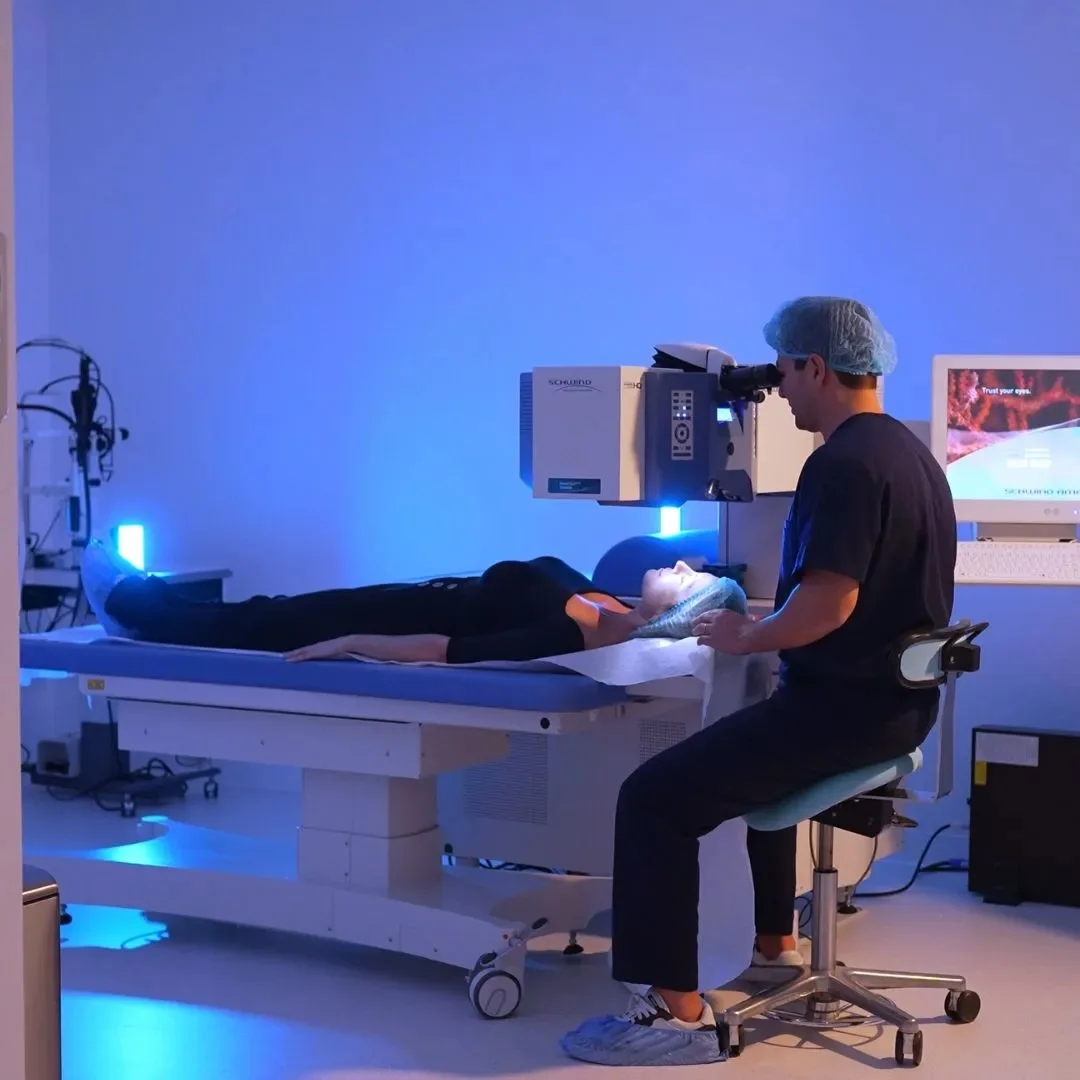
Eye symptoms can sometimes appear straightforward, yet the visual system is complex enough that similar complaints may originate from very different structures. At Aziz Ophthalmology, Dr. Hassan Abdul Aziz provides ophthalmic care in Dubai at Emirates Hospital Jumeirah, where clinical examination can be supported by diagnostic technologies when appropriate. The practice covers different areas of eye care, including refractive vision correction, cataract and retinal conditions, with an approach focused on understanding the cause of a patient’s symptoms before considering treatment.
For patients searching for an ophthalmologist in International City, this distinction is particularly important: the symptom a person notices is only the starting point of the investigation. Blurred vision, glare, floaters or difficulty focusing do not automatically identify a specific eye condition. Proper diagnosis connects symptoms with clinical findings, helping patients avoid self-diagnosis and treatments chosen without knowing which part of the eye is actually responsible.
Why can the same eye symptom have different causes?
Blurred vision is a useful example of why symptoms alone rarely provide a complete answer. A person may describe objects as less sharp, difficulty focusing on text or a general reduction in visual clarity. Although these experiences sound similar, their underlying causes can be very different.
A refractive error can prevent light from focusing correctly, while changes in the ocular surface may make vision fluctuate. The cornea can influence the way light enters the eye, and changes in the natural lens can progressively affect transparency and focus. The retina, located at the back of the eye, can also cause alterations in central vision, detail or image quality when affected by disease.
The way a symptom develops therefore matters. Is the blurring constant or intermittent? Did it appear suddenly or gradually? Does it affect one eye or both? These details help guide the examination but do not replace it. Rather than selecting drops, supplements or other remedies based on assumptions, patients benefit from identifying the structure responsible for the change before deciding what should be done.
How does an ophthalmologist determine what is causing blurred vision?
The investigation usually begins with the patient’s history and a description of the visual problem. Knowing when the symptom started, whether it changes throughout the day and which activities make it more noticeable can provide valuable information. The ophthalmologist can then combine these details with objective measurements and examination of the eye.
At Aziz Ophthalmology, patients initially undergo an assessment with the optometrist before seeing Dr. Aziz. Refraction can determine whether an optical correction contributes to the problem, while examination of the anterior eye can assess structures such as the cornea and natural lens. When necessary, additional diagnostic testing can investigate structures that require more detailed evaluation.
This step-by-step approach helps avoid assuming that every episode of blurred vision has the same solution. A new prescription may be appropriate for one patient, while another may require evaluation of a cataract, corneal condition or retinal change. The purpose of diagnosis is therefore not simply to confirm that vision is blurry, but to establish why it is blurry.
What can glare and difficulty seeing at night indicate?
Glare is another symptom that patients can easily associate with a single cause. Bright headlights may become uncomfortable, lights may appear surrounded by halos or visual contrast may seem reduced after sunset. These changes can become particularly noticeable during driving, but they do not automatically mean that a patient has cataracts or another specific condition.
Changes in refraction, the ocular surface, cornea and natural lens can all influence how light is transmitted and focused. A cataract can contribute to glare as the natural lens becomes cloudy, but the diagnosis requires examination. The patient’s age, visual history and other symptoms also need to be considered.
Repeatedly increasing screen brightness or avoiding certain activities may compensate for the inconvenience without explaining it. If glare or night-vision difficulties persist or progressively worsen, professional assessment can help identify the cause. Treating the underlying condition requires more information than the symptom itself can provide, which is why self-diagnosis should not determine the treatment pathway.
What do floaters and flashes mean for eye health?
Floaters are often described as dots, threads, cobweb-like shapes or shadows moving across the visual field. Many people experience them, particularly as changes occur in the vitreous gel inside the eye. Long-standing floaters that remain stable may have a different significance from a sudden appearance or rapid increase in their number.
Flashes of light can occur when the vitreous interacts with the retina. In some cases, changes in the vitreous may be associated with a retinal tear, which can potentially progress to retinal detachment. A new dark shadow, curtain-like effect or loss of part of the visual field requires prompt professional assessment rather than waiting at home to see whether the symptom disappears.
Dr. Hassan Abdul Aziz has advanced training in vitreoretinal diseases and retinal surgery, and retinal care forms an important part of his clinical work. Online images or descriptions cannot show whether an individual patient’s retina is intact.
How can diagnostic technology distinguish between different eye conditions?
Different structures require different forms of assessment. A test designed to examine the cornea does not provide the same information as imaging of the retina, just as measuring a glasses prescription cannot determine everything about the health of the eye. Diagnostic technology is most useful when selected according to a specific clinical question.
Having access to imaging, however, does not mean that every patient requires every test. Results must be interpreted alongside symptoms, medical history and clinical examination. Technology supports the ophthalmologist’s diagnosis rather than making the diagnosis independently, allowing investigations to be tailored to what the doctor is trying to understand.
Why is early assessment important when symptoms suddenly change?
Gradual symptoms and sudden symptoms should not always be approached in the same way. A mild change developing over several months may allow time for a routine assessment, while sudden loss of vision, a new area missing from the visual field or a rapid increase in flashes and floaters can require more urgent attention.
This is particularly relevant to retinal conditions because some problems can develop without external signs that the patient can see in a mirror. There may be no redness or visible change to the front of the eye. The symptom may be the only warning that something has changed inside the eye, making professional examination especially important.
Early assessment does not mean that every sudden symptom will lead to surgery or another procedure. In many situations, examination may show that monitoring is appropriate. The essential point is that this distinction can only be made after the eye has been evaluated. Delaying assessment while attempting self-treatment can leave the underlying cause unknown.
Ophthalmologist in International City: understanding symptoms before choosing treatment
Common visual complaints can be deceptive because similar symptoms may originate from different parts of the eye. Blurred vision, glare, focusing difficulties, floaters and flashes each require interpretation within the patient’s individual clinical picture. Diagnosis therefore comes before treatment, allowing the ophthalmologist to determine whether the issue involves refraction, the cornea, natural lens, retina or another aspect of ocular health.
Patients searching for an ophthalmologist in International City should be aware that Dr. Hassan Abdul Aziz’s Dubai practice is located at Emirates Hospital Jumeirah on Jumeirah Beach Road, rather than in International City itself. For patients travelling from International City and experiencing persistent, progressive or sudden visual changes, Aziz Ophthalmology provides clinical assessment and appropriate diagnostic investigation to clarify the cause and determine a suitable pathway based on the individual findings.