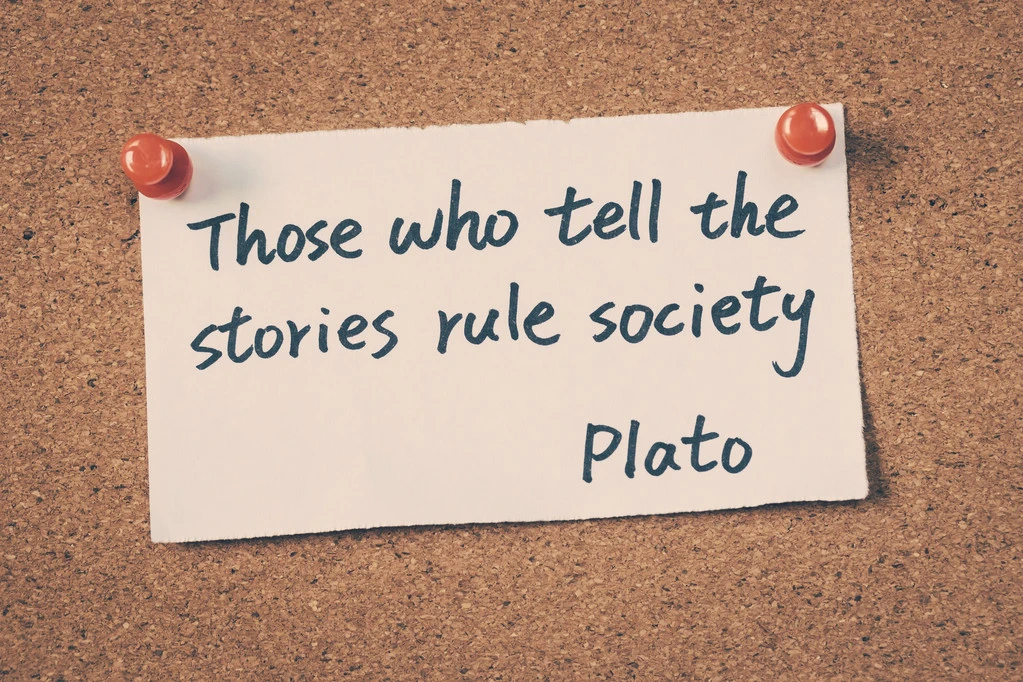
Your Topics | Multiple Stories: How One Idea Becomes Endless Powerful Content
Your topics | multiple stories — four simple words that describe one of the most powerful shifts you can make in how you create content. If you’ve ever poured effort into an article and watched it disappear into silence, or struggled to say something new about a topic your audience already knows, this approach is the answer you didn’t know you were looking for.
The idea is this: every topic you care about contains not one story, but many. And the creators, bloggers, and brands winning online right now aren’t the ones with the most unique topics — they’re the ones who’ve learned to tell the same core idea from five different angles, to five different readers, in five different ways that each feel completely fresh.
In this guide, you’ll learn exactly what “your topics | multiple stories” means, why it works better than traditional single-angle content, how to apply it to your own niche, and how to use it to build real authority, deeper reader connection, and stronger SEO — all from the same bank of ideas you already have.
What Does “Your Topics | Multiple Stories” Actually Mean?

At its core, your topics | Multiple stories is a content philosophy and storytelling strategy built on a single insight: no topic has just one story.
Think about something as simple as confidence. You could write one article about what confidence is. But that single article can’t hold everything confidence actually contains:
- The story of someone who found confidence at 35, not 22
- The story of how a morning skincare routine changed how a woman sees herself
- The story of a wardrobe overhaul that shifted someone’s entire posture
- The story of the mindset work that made the external changes stick
- The data behind why self-presentation affects self-perception
- The expert perspective on how habits compound into identity
Each of those is a different story. Each speaks to a different reader. Each lands at a different moment in a reader’s journey. Together, they build a picture of confidence that no single piece ever could.
That’s your topics | multiple stories in action.
Rather than asking “what should I write about today?”, you ask: “What angle of this topic haven’t I told yet? Whose story is missing? What perspective would reach the reader I haven’t reached?”
Why This Strategy Works So Well
It Reflects How People Actually Think
Humans don’t learn from facts. They learn from stories — specifically, from stories that connect to something they’ve already experienced, felt, or wondered about.
When you offer multiple stories around one topic, you dramatically increase the chance that something lands for each reader. One reader connects with the personal narrative. Another needs the how-to. A third trusts the data. A fourth stays for the real-world case study.
Single-angle content leaves most of these readers underserved. Multiple stories serve all of them.
It Builds Deeper Topic Authority
Search engines in 2026 aren’t just rewarding individual well-written pages. They’re rewarding topical authority — the signal that a website covers a subject comprehensively, from multiple angles, over time.
When your site consistently returns to the same core topics through different story lenses, Google recognizes you as a true authority in your niche. That recognition compounds. The more stories you tell around your topics, the more keywords you cover, the more internal linking opportunities you create, and the stronger your overall domain authority becomes.
It Solves the “I’ve Already Written About That” Problem
Every content creator hits the wall. You feel like you’ve covered your topic. You’ve said what you know. The well feels dry.
Your topics | multiple stories eliminates this problem permanently. There is no such thing as a topic you’ve fully covered — only angles you haven’t explored yet.
You haven’t run out of content. You’ve only run out of one perspective on your content.
The 7 Story Angles Every Topic Contains

This is the practical engine of the strategy. Every topic — regardless of niche — contains at least these seven story types. Once you know them, you’ll never look at a blank content calendar the same way again.
1. The Personal Narrative
This is someone’s real, lived experience with your topic. It’s emotional, specific, and deeply relatable. Personal narratives make abstract ideas feel real and achievable.
Example for a beauty blog: “I spent £400 on skincare before I realized I’d been skipping SPF every morning — here’s what changed when I stopped.”
2. The How-To Guide
This is the practical, step-by-step angle. It serves readers who are ready to act and want exact instructions.
Example: “How to Build a Baddie Skincare Routine from Scratch in 5 Steps”
3. The Data and Research Angle
This is the evidence-based perspective. It earns trust, supports claims, and appeals to readers who need proof before they believe.
Example: “What Dermatologists Actually Say About the 10-Step Skincare Routine (And What to Cut)”
4. The Expert or Authority Perspective
This brings in a credible external voice — a professional, a study, an industry figure — to validate and deepen the topic.
Example: “A Makeup Artist’s Take on the Baddie Makeup Trends Dominating 2026”
5. The Comparison or Contrast Story
This pits two approaches, products, or perspectives against each other. Comparison content is highly searchable and keeps readers engaged through decision-making tension.
Example: “Morning Skincare vs. Night Skincare — What Your Skin Actually Needs at Each Stage”
6. The Myth-Busting or Counterintuitive Story
This challenges what most people believe. It generates strong engagement because it surprises readers and makes them question assumptions.
Example: “Why Washing Your Face Twice a Day Might Be the Reason Your Skin Is Breaking Out”
7. The Transformation or Journey Story
This follows a character (real or composite) from problem to solution over time. It’s the most emotionally compelling format and the most shareable.
Example: “From Clueless to Confident: How a 30-Day Glow-Up Challenge Changed My Entire Self-Image”
How to Apply Your Topics | Multiple Stories to Any Niche

The beauty of this strategy is that it works regardless of what you write about. Here’s how to implement it, step by step.
Step 1: Identify Your Core Topics
Every niche has 5–10 themes it returns to again and again. These are your anchor topics — the subjects your audience came for, searches for, and keeps reading about.
For a lifestyle and beauty blog, those might be:
- Skincare routines
- Baddie fashion and outfit styling
- Makeup techniques
- Self-care and wellness
- Confidence and mindset
- Glow-up transformations
- Beauty product reviews
For a finance blog, they might be: budgeting, investing, debt payoff, passive income, frugal living.
For a fitness blog: training routines, nutrition, recovery, mindset, body image.
The topics don’t change. The stories around them do — and that’s the entire point.
Step 2: Map Your Story Angles
Take each core topic and brainstorm one story from each of the 7 angles above. That gives you a minimum of 7 articles per topic. With 8 core topics, that’s 56 pieces of content from ideas you already know.
| Core Topic | Story Angle | Content Idea |
| Skincare | Personal Narrative | “I followed a dermatologist’s routine for 60 days — here’s what happened” |
| Skincare | How-To | “5-Step Baddie Skincare Routine for Beginners” |
| Skincare | Data | “What the Research Says About Retinol (and Who Should Actually Use It)” |
| Skincare | Expert | “A Facialist’s Honest Opinion on Viral TikTok Skincare Trends” |
| Skincare | Comparison | “Drugstore vs. High-End Serums: Is the Price Difference Worth It?” |
| Skincare | Myth-Busting | “You Don’t Need 10 Steps — Here’s What Your Skin Actually Requires” |
| Skincare | Transformation | “My Skin Before and After 90 Days of Consistent SPF” |
Notice that every single one of those targets different search queries, different reader emotions, and different stages of the reader’s journey — while all living under the same anchor topic of skincare.
Step 3: Build a Story Map, Not a Content Calendar
Most content calendars ask: what are we publishing next week?
A story map asks: what angles of our core topics haven’t we told yet? Where are the gaps in our topic coverage? Which reader type haven’t we written for recently?
This shift turns your content strategy from reactive to intentional. You stop chasing trends and start building an interconnected body of work that compounds in authority over time.
Step 4: Link Your Stories Together
Here’s where the SEO magic multiplies. Every story you tell around a topic should link to two or three related stories on the same topic.
When a reader lands on your comparison article about drugstore vs. high-end serums, they should be one click away from your personal narrative about 60 days on a dermatologist’s routine, and one click away from your step-by-step beginner guide.
This internal linking structure keeps readers on your site longer, reduces bounce rate, and signals to search engines that your topic coverage is deep and interconnected — which directly improves rankings.
Your Topics | Multiple Stories vs. Traditional Content Approaches
Most content strategies still operate on a one-topic, one-article model. Here’s why that leaves authority on the table:
| Approach | Depth | SEO Impact | Reader Retention | Authority Signal |
| One topic, one article | Surface level | Single keyword | Low — one entry point | Weak |
| Topic clusters (related pages) | Medium | Good | Medium | Good |
| Your Topics | Multiple Stories | Deep | Excellent | High — multiple entry points | Strong |
The multiple stories approach doesn’t just produce more content. It produces better-connected content that serves readers at every stage of their knowledge and decision-making journey.
Real Examples: Multiple Stories Around One Topic
Example 1: Topic — “Glow-Up”
A single article called “How to Do a Glow-Up” covers the basics. But your topics | multiple stories gives you:
- Personal: “My 30-Day Glow-Up Changed More Than My Appearance — It Rebuilt My Confidence”
- How-To: “The 5-Stage Glow-Up Framework: From Skin to Mindset”
- Data: “What Psychology Says About the Link Between Self-Care Habits and Self-Esteem”
- Expert: “A Stylist’s Step-by-Step Guide to a Wardrobe Glow-Up on Any Budget”
- Comparison: “Glow-Up on $50 vs. $500 — What’s Actually Worth the Spend”
- Myth-Busting: “Why Your Glow-Up Won’t Stick Without This One Thing Most People Skip”
- Transformation: “Before and After: 6 Women Share Their Real Glow-Up Journeys”
That’s a full content cluster — 7 interlinked articles, all targeting different variations of the same search intent, all linking to each other, all building your authority on the exact topic your audience came to you for.
Example 2: Topic — “Self-Care”
- “Why I Started Treating My Skincare Routine as a Non-Negotiable — Not a Luxury”
- “The 10-Minute Morning Self-Care Routine That Actually Fits a Busy Schedule”
- “Research-Backed Reasons Why Consistent Self-Care Reduces Anxiety (Not Just Stress)”
- “What a Therapist Wants You to Know About Self-Care That Instagram Gets Wrong”
- “Self-Care at Home vs. Self-Care at a Spa — What’s More Effective Long Term?”
- “The Biggest Myth About Self-Care (Hint: It Has Nothing to Do With Bubble Baths)”
- “She Didn’t Believe in Self-Care — Until One Habit Changed Her Mornings Forever”
Each piece serves a different reader. Each builds your authority. Each earns a different set of keywords. Together, they make your site the destination for self-care content in your niche.
Common Mistakes to Avoid With This Strategy
Even a great strategy can be undermined by how it’s executed. Watch out for these:
Telling the same story with a different title. Genuine multiple stories means different angles, different formats, different reader needs — not just rewriting the same article with slightly different wording.
Ignoring the connective tissue. Each story should reference and link to the others. Isolated articles don’t build authority. Connected ones do.
Chasing every angle at once. Start with your three or four most important core topics. Build a complete story cluster around each one before moving to the next. Depth beats breadth, especially early on.
Forgetting the reader’s journey. Some readers are discovering your topic for the first time. Others know it well and want advanced insights. Your multiple stories should serve both — beginners and experienced readers alike.
Treating it as a quantity play. The goal isn’t to publish more. It’s to serve more of your audience more deeply. Quality, relevance, and connection matter more than volume.
How Multiple Stories Supercharge Your SEO
Google’s helpful content system rewards content that demonstrates genuine expertise and comprehensively serves the reader’s intent. Here’s exactly how this strategy delivers that:
- Broader keyword coverage — Each story angle naturally targets different search queries and long-tail keywords around the same topic
- Topical depth signals — Multiple interconnected pieces on the same subject tell Google you’re an authority, not just a single-article writer
- Lower bounce rates — Readers who find one story they love will follow internal links to the next, sending strong engagement signals
- More backlink opportunities — Different story angles appeal to different sites and writers who want to reference your content
- Featured snippet potential — How-to, comparison, and myth-busting stories frequently capture featured snippets and People Also Ask boxes
The your topics | multiple stories approach isn’t a hack or a workaround. It’s simply a more thorough, more human way of covering a subject — and search engines in 2026 reward exactly that.
FAQ: Your Topics | Multiple Stories — 10 Questions Answered
1. What does “your topics | multiple stories” mean? It means taking one core topic and exploring it through multiple different story angles — personal narratives, how-to guides, data-driven pieces, expert perspectives, comparisons, myth-busting, and transformation stories — rather than writing a single one-size-fits-all article.
2. Why is this approach better than writing one comprehensive article? A single article can only speak to one type of reader at one stage of their journey. Multiple stories serve different readers, different learning styles, and different search intents simultaneously — and they compound in SEO authority over time in ways a single article never can.
3. How many stories do I need per topic? Start with three to five per core topic. The seven story angles outlined in this guide provide a natural framework. Over time, you can expand each topic cluster as your understanding of your audience deepens.
4. Does this strategy work for small blogs and new websites? Absolutely. In fact, it’s especially powerful for new sites because it builds topical authority quickly and efficiently, without needing a massive library of content on hundreds of different subjects.
5. How do I find multiple story angles for a topic I feel I’ve already covered? Start with your audience’s questions, objections, and experiences. What did beginners struggle with that you didn’t cover? What does a more advanced reader need next? What common belief about your topic is actually wrong? Each of those is a new story.
6. Should every story be a long-form article? No. Different story angles suit different formats. Personal narratives work well as longer emotional pieces. How-to guides benefit from step-by-step structure. Comparison pieces can be more concise and table-heavy. Match your format to your story type and your reader’s need.
7. How does this strategy help with People Also Ask and AI Overviews? FAQ-style and myth-busting stories directly target PAA boxes. How-to and expert stories are frequently surfaced in AI Overviews because they provide clear, authoritative, structured answers. Covering multiple story types ensures you appear in multiple SERP features.
8. How do I connect multiple stories into a coherent content cluster? Use consistent internal linking between stories on the same topic. Create a pillar or hub page that introduces the topic and links to all related stories. Reference related pieces naturally within each article. This structure signals topical authority to both readers and search engines.
9. Can I use this strategy for social media content, not just blog posts? Yes. The same principle applies across formats: one topic, multiple angles. A single topic can become an Instagram carousel (how-to angle), a TikTok video (personal story angle), a Pinterest infographic (data angle), and a Twitter/X thread (myth-busting angle) — all from the same core idea.
10. How is “your topics | multiple stories” different from a content series? A content series typically follows one narrative line across multiple installments. Your topics | multiple stories deliberately uses different narrative lenses — meaning the stories are independent of each other while all connecting to the same central theme. Readers can enter the cluster at any point, not just from the beginning.
Conclusion: One Topic, Infinite Stories, Compounding Authority
Here’s the truth that makes your topics | multiple stories so valuable: you don’t need more topics. You need to go deeper into the ones you already know.
The most trusted voices in any niche are not the ones who covered the most ground. They’re the ones who told the same important ideas in so many different ways, from so many different angles, that every kind of reader felt seen.
Start with your core topics. Choose one. Identify the angles you haven’t told yet. Write the next story. Link it to the ones that exist. Keep going.
That’s how individual articles become a body of work. That’s how a website becomes a destination. And that’s how your topics — whatever they are — become multiple stories that serve your readers, build your authority, and grow your platform for the long term.