Improving the appearance of a smile does not necessarily mean extensively reshaping healthy teeth. Modern aesthetic dentistry increasingly focuses on achieving the desired result while preserving as much natural enamel as possible.
This principle is particularly relevant for patients considering dental veneers in Dubai, where digital planning and conservative restorative techniques can influence treatment decisions. At New York Dental Clinic, a multidisciplinary dental practice in Jumeirah 2, tooth preservation forms part of the approach to aesthetic rehabilitation. Understanding how veneers are planned, when enamel removal is necessary and which factors determine treatment suitability is essential before making an informed decision.
What Are Dental Veneers and How Do They Change a Smile?
Dental veneers are thin restorations made from ceramic or composite resin and designed to cover the visible surfaces of teeth. They can modify tooth colour, shape, proportions and minor irregularities, addressing aesthetic concerns that may not be resolved through whitening or other conservative procedures.
Unlike dental crowns, which cover most or all of a tooth’s visible structure, veneers primarily involve the front surface. Their suitability depends on the condition of the underlying teeth, the desired changes and the forces affecting the restoration. The aim is an appearance suited to individual facial features.
Veneers may be considered for discoloured teeth, small fractures, irregular edges or certain spaces between teeth. However, significant misalignment, untreated decay or substantial structural damage may require different approaches. A clinical examination is therefore necessary to establish whether veneers represent an appropriate option.
Do Teeth Have to Be Shaved Before Getting Veneers?
Patients often ask whether veneers require permanent enamel removal. The answer depends on the initial tooth position, the selected restorative material and the intended aesthetic outcome. Some cases require only limited enamel preparation, while others may need more substantial changes to accommodate the restorations.
Preparation creates space for the veneer and helps prevent the finished tooth from appearing excessively bulky. It also helps position restoration margins appropriately. However, removing enamel is generally irreversible, making conservative treatment planning particularly important.
Patients whose teeth are already positioned favourably may require less preparation than those with prominent, crowded or significantly discoloured teeth. The amount of tissue removed should be determined by clinical requirements rather than a standard reduction applied to every patient.
Can Dental Veneers in Dubai Be Applied Without Removing Enamel?
For some patients considering dental veneers in Dubai, minimal-preparation or no-preparation techniques may be possible. These approaches aim to preserve most or all of the original enamel when the existing tooth anatomy provides sufficient space for the restorative material.
However, no-preparation veneers are not appropriate for every smile. Adding material to teeth that are already prominent may create excessive volume, alter the appearance of the gums or interfere with comfortable cleaning. Tooth position, enamel quality and the intended proportions must therefore be evaluated beforehand.
Even when a conservative technique is feasible, minor surface adjustments or finishing procedures may still be necessary. The name of the technique does not determine how much tissue is removed. The treatment plan should explain any irreversible preparation before the procedure begins.
How Does Digital Smile Design Support Conservative Veneer Planning?
Digital planning provides an opportunity to evaluate proposed aesthetic changes before proceeding with treatment. Photographs, digital impressions and facial measurements can help clinicians study tooth proportions and their relationship with the lips and smile. A digital preview can support communication about the intended shape, length and arrangement of the restorations.
At New York Dental Clinic, Digital Smile Design is among the technologies used in aesthetic dentistry. The practice also uses intraoral scanning for treatment planning. These tools can help assess whether proposed changes are compatible with existing tooth structures.
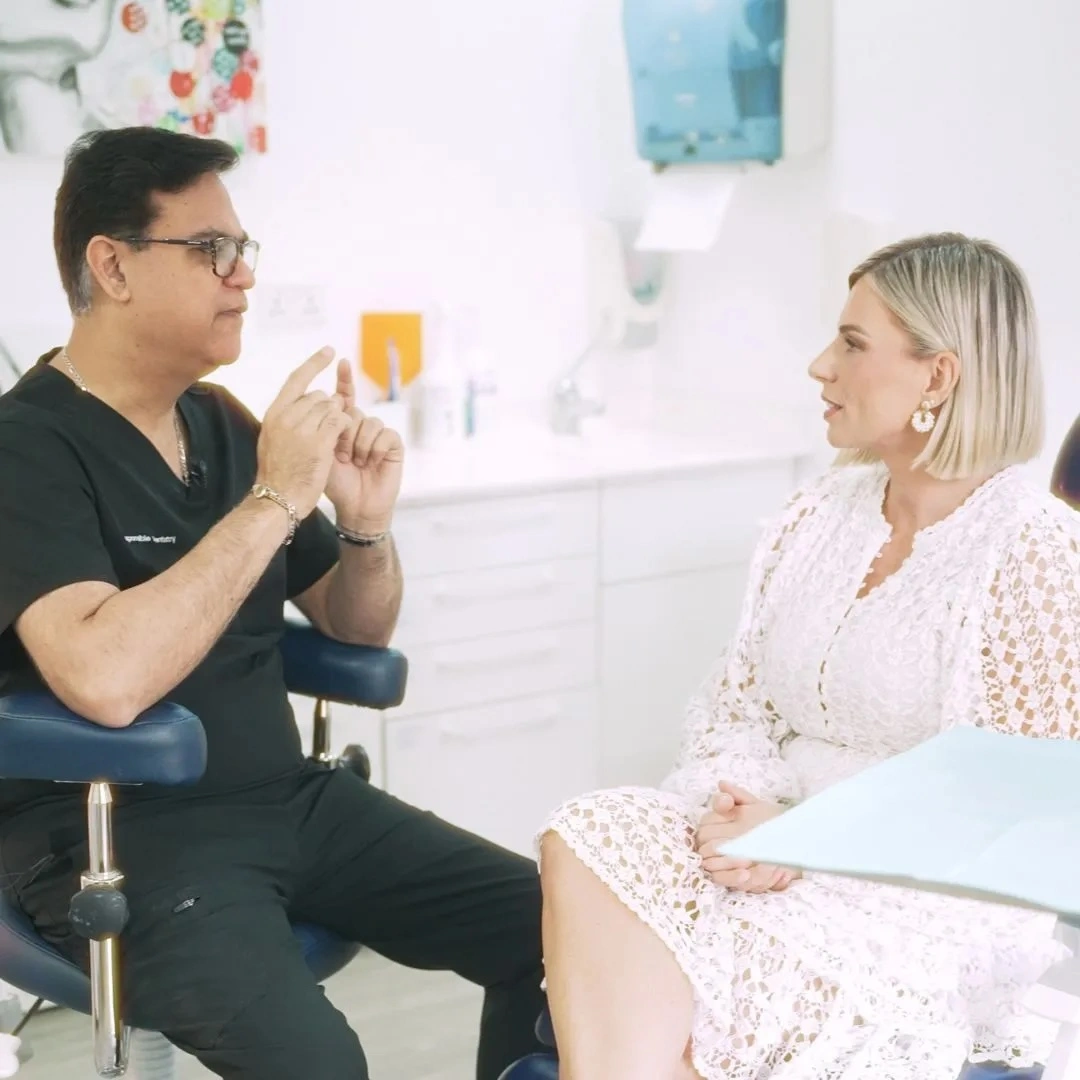
The practice’s approach to veneers is led by Dr Ajay Juneja, a prosthodontist with a professional background in restorative and aesthetic dentistry. His work includes aesthetic rehabilitation and the use of contemporary restorative techniques. Digital planning remains an aid to clinical judgement, however, and a visual simulation should not be interpreted as a guarantee of the final result.
Why Is Preserving Natural Enamel Important?
Enamel protects teeth against everyday mechanical and chemical challenges. Unlike many other tissues, enamel cannot regenerate once substantial amounts have been removed. Preserving healthy enamel therefore helps retain natural tooth structure, an important principle of conservative dentistry.
Enamel also provides a favourable surface for adhesive bonding when its condition and the clinical circumstances are suitable. Retaining sufficient enamel may contribute to the performance of bonded ceramic restorations, although outcomes depend on several factors, including preparation design, materials and functional loading.
Excessive preparation can expose deeper tooth tissues and may increase the complexity of future restorative care. The extent of preparation should therefore be clinically justified, balancing aesthetics, function and the long-term condition of the tooth.
Are Porcelain and Composite Veneers Equally Conservative?
Ceramic and composite resin veneers differ in their application methods and material properties. Ceramic veneers are typically manufactured outside the mouth and subsequently bonded to prepared or minimally prepared tooth surfaces. Their design must account for material thickness, tooth anatomy and the intended aesthetic changes.
Composite resin can sometimes be applied directly to the teeth through an additive technique, with limited or no enamel removal in suitable cases. This may be relevant when correcting small defects or modifying tooth contours. Nevertheless, composite restorations can be susceptible to wear, staining and surface deterioration over time.
At New York Dental Clinic, ceramic veneers and composite bonding are among the aesthetic restorative options considered according to individual needs. Neither material is universally preferable, and the decision should account for the extent of correction, oral health, maintenance requirements and the amount of natural tissue that can be preserved.
What Should Be Evaluated Before Veneer Treatment?
Aesthetic expectations represent only one part of veneer planning. The dentist must also examine the health of the gums, the presence of decay, existing restorations and the way the upper and lower teeth meet. A stable oral environment is important before elective aesthetic treatment, especially when restorations are intended to remain functional over many years.
The examination should consider signs of excessive tooth wear, grinding or clenching. These conditions may affect the design and durability of veneers and can influence whether additional preventive measures are appropriate. The position of the teeth may also determine whether orthodontic correction should be considered before restorative changes.
Patients should understand maintenance requirements and the possibility of future repair or replacement. Veneers are not permanent biological structures, and their longevity depends on material properties, oral habits and individual clinical circumstances. Responsible planning includes discussing limitations as well as potential benefits.
Dental Veneers in Dubai: Why Conservative Planning Matters
Modern restorative materials and digital techniques can improve tooth appearance while limiting unnecessary preparation. Nevertheless, the preservation of healthy enamel remains a clinical priority, not an outcome that can be guaranteed for every veneer procedure.
For patients exploring dental veneers in Dubai, the important distinction is between an aesthetic change that is clinically justified and one that would require unnecessary alteration of healthy teeth. Material selection, tooth position, gum health and functional considerations should all contribute to the decision.
At New York Dental Clinic, veneer treatment is approached within a philosophy of responsible dentistry, combining aesthetic planning with attention to natural tooth preservation. The goal is to evaluate each smile individually and determine whether conservative restorative techniques can provide an appropriate balance between appearance, function and long-term oral health.